Are you experiencing frequent urination, burning while passing urine, blood in your urine, difficulty emptying your bladder, or recurring urinary infections?
These symptoms can be uncomfortable and worrying. However, many urinary problems can be investigated with appropriate medical tests to help identify their underlying causes.
Your doctor may recommend a simple urine test, a kidney and bladder ultrasound, blood tests, or a specialized procedure such as cystoscopy. The choice depends on your symptoms, medical history, examination findings, and suspected condition.
Common urology tests include urinalysis, urine culture, ultrasound KUB, cystoscopy, uroflowmetry, urodynamic studies, kidney function blood tests, and selected CT or MRI scans. Each test provides different information about the urinary system.
For patients searching for urology tests in Nepal, understanding these procedures can make a specialist consultation less stressful and help them prepare more confidently.
At Shankarapur Hospital, located in Jorpati, Kathmandu, the Urology Department provides specialist care for urinary tract conditions, kidney stones, prostate problems, urinary incontinence, and related concerns.
In this article, we explain the most common urological diagnostic tests, why doctors recommend them, what happens during each procedure, whether the tests are painful, and how patients can prepare.
What Are Urology Tests and Why Are They Performed?
Urology tests are medical investigations used to assess the kidneys, ureters, bladder, urethra, and certain parts of the male reproductive system.
The urinary system removes waste and excess fluid from the body through urine.
It includes four main structures:
-
Kidneys: Filter blood and produce urine.
-
Ureters: Carry urine from the kidneys to the bladder.
-
Bladder: Stores urine until it is passed.
-
Urethra: Carries urine out of the body.
Urologists diagnose and manage conditions affecting these structures. They also evaluate prostate problems and selected male reproductive health conditions.
Common Symptoms That May Require Urological Evaluation
A healthcare professional may consider urinary system tests when patients experience:
-
Burning or painful urination.
-
Frequent urination, including at night.
-
Difficulty starting or maintaining urine flow.
-
Weak urinary stream or incomplete bladder emptying.
-
Visible blood in urine.
-
Recurrent urinary tract infections.
-
Persistent lower abdominal or pelvic discomfort.
-
Pain in the side or back that may suggest kidney stones.
-
Loss of bladder control or urinary leakage.
These symptoms have several possible causes and do not necessarily indicate a serious illness.
For example, frequent urination may be related to a urinary infection, bladder irritation, prostate enlargement, medication, or another medical condition.
Patients experiencing repeated nighttime urination can learn more in our article on causes and treatment of frequent urination at night.
How Urologists Decide Which Tests Are Necessary
A urologist usually begins by discussing symptoms, examining the patient, and reviewing relevant medical history.
The doctor may ask about previous infections, kidney stones, medicines, existing illnesses, urinary habits, and family history.
The next step is selecting appropriate investigations.
For example, someone with painful urination may initially need a urine test, while a person with suspected kidney stones may require urinary tract imaging.
Not every patient needs cystoscopy, CT imaging, or advanced bladder function tests. The aim is to select investigations that answer a specific clinical question while avoiding unnecessary procedures.
1. Urine Tests — Urinalysis, Urine Culture and Microscopy
Urine testing is among the most frequently used investigations for urinary symptoms.
A urine test for UTI, kidney problems, or blood in urine is often an early step in urological evaluation.
What Is a Urinalysis Test?
Urinalysis examines the physical, chemical, and sometimes microscopic characteristics of urine.
A routine urine examination may assess:
-
Red blood cells, which can suggest bleeding somewhere in the urinary tract.
-
White blood cells, which may be associated with infection or inflammation.
-
Protein, which can indicate a possible kidney-related problem.
-
Glucose, which may be relevant to diabetes.
-
Nitrites or leukocyte esterase, which may suggest bacterial infection.
-
Crystals or other microscopic findings.
In Nepal, patients may see terms such as urine routine test, urine R/M/E, or urine routine and microscopy test on a laboratory request.
An abnormal result does not automatically establish a diagnosis. The findings must be interpreted with symptoms and other medical information.
What Is a Urine Culture Test?
A urine culture test helps identify bacteria or other microorganisms that may be responsible for a urinary tract infection.
A urine sample is placed in conditions that allow relevant organisms to grow. If an infection is identified, additional testing may help determine which antibiotics are appropriate.
Doctors may recommend urine culture when symptoms suggest a UTI, particularly in recurrent, complicated, or persistent cases.
A urine culture commonly takes around 24–48 hours for initial results, although final identification and susceptibility testing may take longer.
For detailed information, see the MedlinePlus guide to urine culture.
Urinalysis vs. Urine Culture: What's the Difference?
| Feature | Urinalysis | Urine culture |
|---|---|---|
| Main purpose | Detect abnormalities and signs of urinary problems | Identify organisms causing infection |
| Sample | Urine | Urine |
| Common use | Initial evaluation of UTI, blood or protein in urine | Investigating suspected bacterial UTI |
| Results | Often available relatively quickly | Usually requires laboratory incubation |
| Can identify specific bacteria? | Not reliably | Often yes |
A urinalysis may suggest infection, but a culture can provide more specific information when bacterial infection is suspected.
Patients can also explore our guide to urinary tract infection symptoms, treatment and prevention.
How to Collect a Urine Sample Correctly
For many routine urine tests, patients are asked to provide a clean-catch, midstream urine sample.
This typically involves cleaning the area as instructed, beginning to urinate into the toilet, and then collecting the middle portion of urine in a sterile container.
Avoid touching the inside of the container or its lid.
Tell your healthcare team if you have already started antibiotics or are menstruating, as these details may affect collection instructions or interpretation.
Always follow the laboratory's specific directions because some tests require different collection methods.
2. Ultrasound Tests — Kidney, Bladder and Urinary Tract
A kidney and bladder ultrasound is a widely used imaging investigation in urology.
It uses sound waves to create pictures of internal structures and does not involve ionizing radiation.
Patients looking for kidney ultrasound in Nepal, renal ultrasound tests, or urinary tract ultrasound are often investigating suspected stones, urinary blockage, or bladder-emptying problems.
What Is a Kidney and Bladder Ultrasound?
A healthcare professional places gel on the skin and moves an ultrasound probe over the relevant area.
The probe produces images of the kidneys or bladder that can help identify structural abnormalities.
A urinary tract ultrasound may be recommended to assess:
-
Kidney size and appearance.
-
Swelling caused by a possible urinary blockage.
-
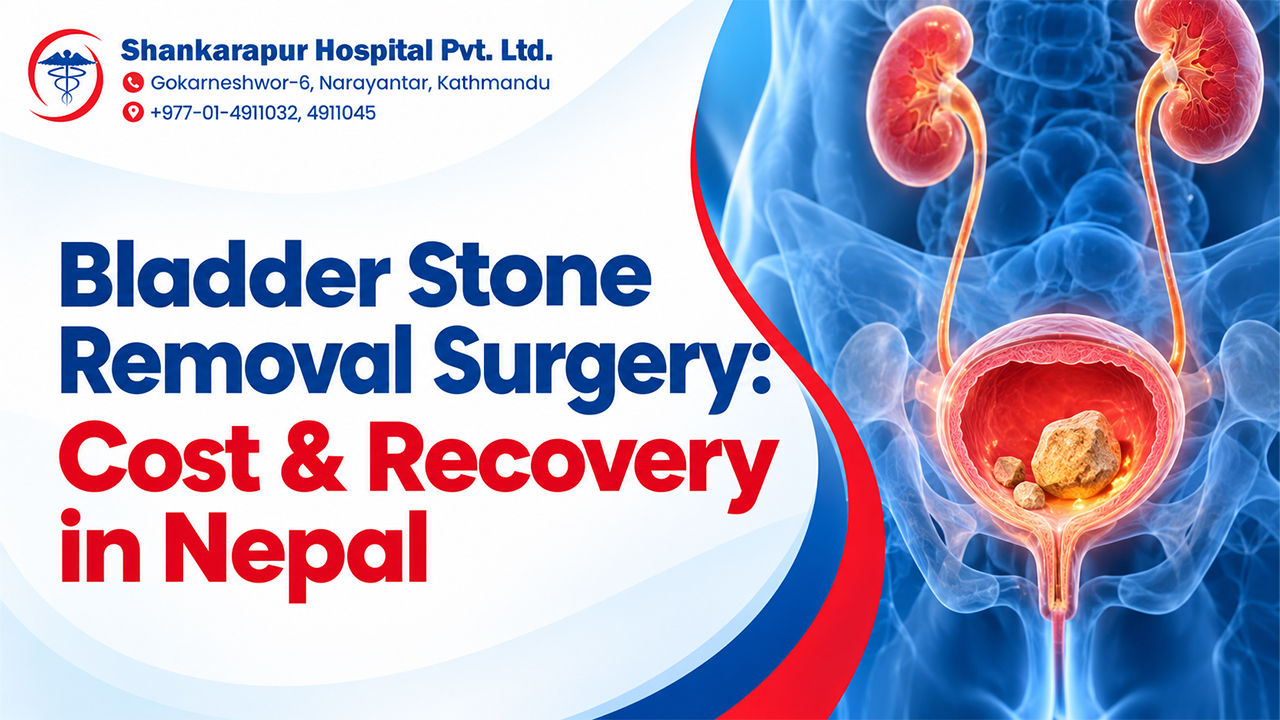
Certain kidney or bladder stones.
-
Bladder wall abnormalities.
-
The amount of urine remaining after urination.
-
Selected cysts, masses, or other changes requiring further evaluation.
An ultrasound is useful but does not detect every urinary condition or every stone.
What Can an Ultrasound KUB Detect?
KUB stands for kidneys, ureters, and bladder.
An ultrasound KUB evaluates relevant parts of the urinary tract, although normal ureters are not always clearly visible on ultrasound.
It may identify kidney stones, urinary tract swelling, bladder stones, or abnormalities that require further assessment.
It is important to distinguish an ultrasound KUB from a plain X-ray KUB, as these are different imaging techniques.
What Is a Post-Void Residual Test?
A post-void residual (PVR) test measures how much urine remains in the bladder after a patient urinates.
It is often performed using a bladder ultrasound scanner, although other methods may be used.
Doctors may recommend PVR measurement for patients with a weak urine stream, difficulty emptying the bladder, urinary retention, or selected bladder control problems.
How to Prepare for a Urinary Tract Ultrasound
Some kidney and bladder ultrasound examinations require patients to arrive with a full bladder.
You may be asked to drink water before the appointment and avoid urinating until the scan is complete.
Preparation varies according to the examination, so follow the instructions provided by the imaging department rather than assuming that every ultrasound requires the same preparation.
Is a Urinary Ultrasound Painful?
An external kidney or bladder ultrasound is generally painless.
Patients may feel mild pressure from the probe, particularly if the examination area is already tender, or discomfort from holding a full bladder.
Most people can return to their usual activities after a routine external ultrasound.
Shankarapur Hospital lists ultrasound and CT scanning among its Diagnostic & Imaging Services. Patients should confirm the specific examination and preparation requirements when arranging an appointment.
3. Cystoscopy — Examining the Bladder from Inside
A cystoscopy test is a specialized urological procedure that allows a doctor to examine the inside of the urethra and bladder.
It provides information that cannot always be obtained through urine testing or ultrasound.
What Is a Cystoscopy Test?
During cystoscopy, a urologist inserts a thin instrument called a cystoscope through the urethra into the bladder.
The instrument contains a light and camera that allow the doctor to examine the internal lining.
A cystoscopy procedure may be recommended for:
-
Unexplained blood in urine.
-
Certain recurrent urinary symptoms.
-
Suspected bladder abnormalities.
-
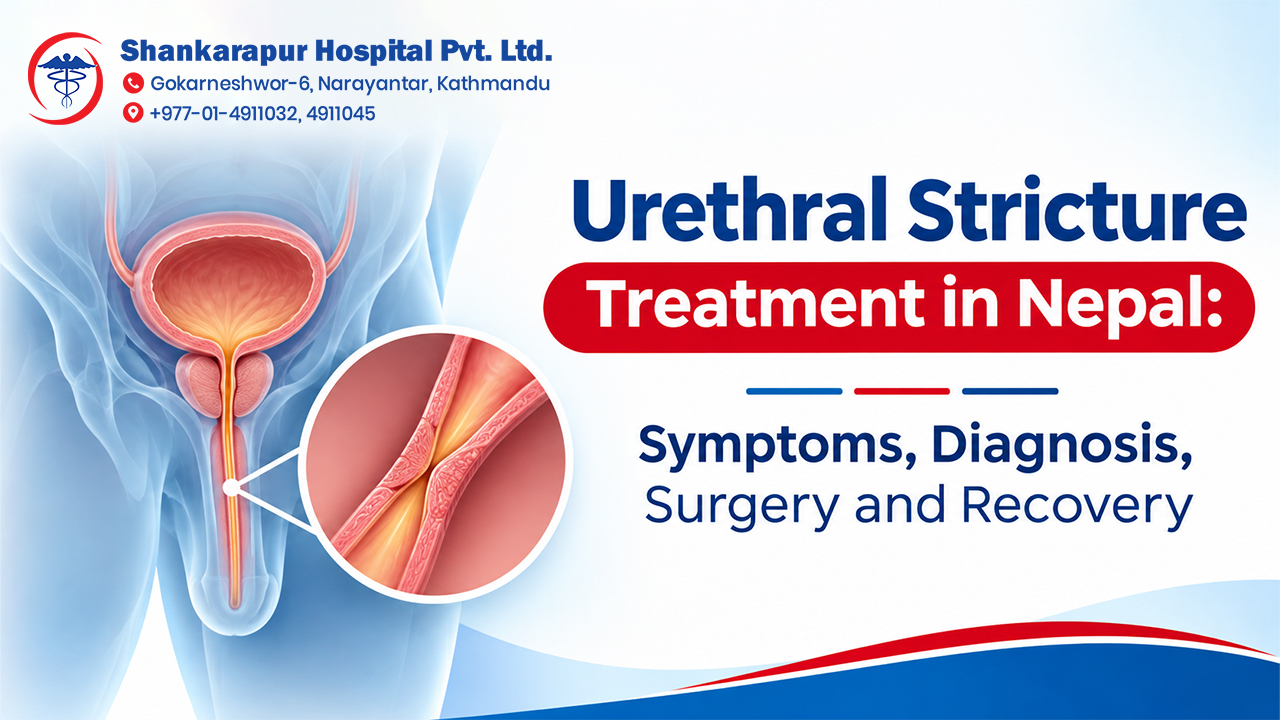
Selected urinary blockage or narrowing concerns.
-
Further investigation of abnormal test results.
It may also be used to obtain tissue samples or perform selected treatments.
Flexible vs. Rigid Cystoscopy
There are two main types.
Flexible cystoscopy uses a thin, bendable instrument and is commonly performed for diagnostic examination, often with local anaesthetic gel.
Rigid cystoscopy uses a straight instrument and may be selected when more extensive examination, biopsy, or treatment is needed. Regional or general anaesthesia may be used depending on the procedure.
The urologist will explain the appropriate method and anaesthesia plan.
What Happens During a Cystoscopy Procedure?
The healthcare team explains the procedure and helps position the patient.
Depending on the type of examination, local anaesthetic gel, sedation, or another form of anaesthesia may be used.
The cystoscope is then gently passed through the urethra into the bladder.
Sterile fluid may be introduced to expand the bladder and improve visibility.
The urologist examines the bladder lining and may take additional samples if clinically indicated.
A straightforward diagnostic examination is usually relatively short, while procedures involving treatment or biopsy can take longer.
The NIDDK guide to cystoscopy and ureteroscopy provides a detailed patient explanation.
Is Cystoscopy Painful for Men and Women?
Many patients worry about whether cystoscopy is painful.
The experience varies depending on the procedure, the person's anatomy, individual sensitivity, and the anaesthesia used.
A flexible cystoscopy performed with local anaesthetic gel may cause pressure, discomfort, or a temporary urge to urinate.
Some patients experience mild burning during urination afterward.
Cystoscopy should not be described as completely pain-free for everyone. Your healthcare team can explain how discomfort will be managed and what to expect.
Cystoscopy Preparation, Recovery and Possible Complications
Before cystoscopy, tell the doctor about your medicines, allergies, existing urinary infections, and relevant medical conditions.
Follow instructions about food, fluids, medication adjustments, and transportation. Preparation may differ considerably between a simple flexible examination and a procedure requiring sedation or general anaesthesia.
After cystoscopy, mild burning and a small amount of blood in urine can occur temporarily.
Possible complications include urinary infection, difficulty passing urine, significant bleeding, and rarely injury to urinary structures.
Seek urgent medical assessment if you develop fever or chills, severe or worsening pain, heavy bleeding, or an inability to pass urine.
The NHS cystoscopy information explains preparation, recovery, and complications.
Important: Cystoscopy is not required for every urinary complaint. Its necessity and local availability should be discussed with the treating urologist.
4. Uroflowmetry and Urodynamic Testing
Not every urinary problem involves infection or visible structural abnormalities.
Sometimes the main concern is how well the bladder stores and releases urine.
This is where bladder function tests become useful.
What Is a Uroflowmetry Test?
A uroflowmetry test measures the speed and pattern of urine flow.
During the test, the patient urinates into a specially designed measuring device, which records the volume of urine and how quickly it passes.
Doctors may consider uroflowmetry for patients reporting:
-
Weak or interrupted urine flow.
-
Difficulty starting urination.
-
Straining while passing urine.
-
Incomplete bladder emptying.
-
Symptoms associated with possible urinary obstruction.
The test is generally non-invasive and does not require instruments to be inserted into the body.
How Does a Urine Flow Test Work?
The patient is usually asked to arrive with enough urine in the bladder for a representative void.
When ready, the patient urinates into the flow-measuring equipment.
The device records the urine flow pattern, and the results may be reviewed alongside post-void residual measurements.
An abnormal flow result can suggest a problem but does not independently identify its exact cause.
What Are Urodynamic Studies?
Urodynamic testing refers to a group of investigations assessing how the bladder, urethra, and urinary sphincters store and release urine.
Depending on the clinical concern, testing may assess:
-
Bladder pressure.
-
Bladder capacity.
-
Urinary leakage.
-
Muscle or sphincter coordination.
-
Pressure and flow during urination.
Some urodynamic tests involve small catheters or sensors and may cause temporary discomfort.
The NIDDK overview of urodynamic testing explains the different techniques.
When Might Bladder Function Tests Be Recommended?
Urodynamic testing may be considered when symptoms remain unexplained after initial evaluation, when urinary leakage is complex, or when more detailed bladder function information is needed before selected treatments.
Not everyone with frequent urination or incontinence requires advanced testing.
Availability of uroflowmetry and urodynamic investigations should be confirmed directly with the relevant hospital department.
5. Blood Tests for Kidney and Prostate Health
Although urine testing and imaging are central to urology, blood tests can provide essential information about kidney function and prostate-related concerns.
Kidney Function Tests — Creatinine and eGFR
A kidney function test may include serum creatinine and an estimated glomerular filtration rate (eGFR).
Creatinine is a waste product measured in the blood. Its concentration is one factor used to assess kidney function.
eGFR is an estimate of how effectively the kidneys filter blood.
Doctors may also request blood urea testing, electrolytes, and urine albumin measurements, depending on the suspected condition.
These investigations can be relevant when someone has kidney disease risk factors, urinary obstruction, abnormal imaging findings, or other concerns affecting kidney function.
According to the National Kidney Foundation, blood and urine tests often provide complementary information about kidney health.
For related information, read our article on nephrology and kidney care in Nepal.
What Is a PSA Blood Test?
A prostate-specific antigen (PSA) test measures PSA levels in the blood.
It may be used as part of prostate cancer screening discussions or the evaluation and monitoring of selected prostate conditions.
However, a raised PSA does not automatically mean prostate cancer.
PSA may also increase because of benign prostate enlargement, inflammation, infection, or other factors.
Patients considering PSA screening should discuss its potential benefits, limitations, and follow-up implications with a healthcare professional.
More information is available through MedlinePlus's PSA test guide.
When Are Additional Prostate Investigations Needed?
If a patient has difficulty passing urine, a weak stream, frequent nighttime urination, or another prostate-related concern, the doctor may recommend additional assessment.
Depending on the findings, this may include a physical examination, urine tests, ultrasound, post-void residual measurement, or other investigations.
In selected situations, prostate MRI or biopsy may be recommended.
Learn more in our guide to enlarged prostate symptoms, diagnosis and treatment.
6. Other Urology Tests — CT Scan, MRI and Additional Investigations
Some urinary problems require more detailed investigations than a routine urine test or ultrasound can provide.
CT Scans for Kidney Stones and Urinary Conditions
A CT scan uses X-rays and computer processing to produce detailed cross-sectional images.
For suspected kidney stones, a non-contrast CT KUB may be recommended in appropriate clinical situations.
CT imaging can help identify stone size, location, and possible urinary obstruction.
A different examination, such as CT urography using contrast material, may be considered for selected urinary tract concerns.
Because CT involves radiation and contrast can carry specific risks, the choice of examination depends on the patient's circumstances.
Our article on kidney stone treatment options in Nepal explains how diagnosis influences further management.
MRI for Selected Urinary or Prostate Conditions
MRI uses magnetic fields and radio waves to produce detailed images without ionizing radiation.
It may be recommended for selected prostate, kidney, or urinary tract concerns.
For example, a prostate MRI may help a specialist investigate a suspected abnormality or plan further evaluation.
MRI is not routinely necessary for all urinary symptoms, and patients should confirm whether it is available at their chosen facility or requires referral.
Urine Cytology, Biopsy and Other Specialized Tests
Urine cytology examines urine samples for abnormal cells and may be used in selected evaluations for urinary tract cancer.
Biopsy involves collecting a tissue sample for examination under a microscope when clinically indicated.
Other specialized investigations may include additional urine studies, imaging tests, or endoscopic procedures.
The appropriate investigation depends on the suspected disease and specialist assessment.
For a broader explanation of imaging methods, consult the NIDDK guide to urinary tract imaging.
Which Urology Test Might Be Recommended for Different Symptoms?
Patients often search for a specific investigation without knowing which one is appropriate.
The following table provides an overview of tests that a doctor may consider.
| Symptom or concern | Possible investigations |
|---|---|
| Burning or painful urination | Urinalysis, urine culture when indicated |
| Blood in urine | Urinalysis, imaging, cystoscopy depending on risk and clinical findings |
| Frequent urination | Urinalysis, bladder diary, post-void residual and selected bladder function tests |
| Suspected kidney stones | Urine tests, ultrasound or CT scan |
| Weak urine stream | Urinalysis, uroflowmetry, post-void residual and selected prostate assessment |
| Recurrent UTI | Urine culture and additional investigations in selected cases |
| Urinary leakage | Bladder diary, urinalysis, PVR and sometimes urodynamic testing |
| Abnormal kidney function | Creatinine, eGFR, urine albumin and imaging when indicated |
These are examples, not a checklist of tests that every patient should request. The treating clinician decides which investigations are necessary.
For patients who notice red, pink, or brown urine, our guide on blood in urine: causes and treatment options provides additional information.
How to Prepare for a Urology Test
Preparation depends on the particular test being performed.
Following the correct instructions can help avoid delays, repeat testing, or misleading results.
Preparing for a Urine Test
Use the sterile sample container provided or recommended by the laboratory.
Follow instructions for clean-catch or midstream sample collection when applicable.
Tell the healthcare team about antibiotics, medications, or other factors that may affect the results.
Some investigations require a first-morning sample or a timed collection, while others do not.
Preparing for an Ultrasound
Ask whether the examination requires a full bladder, fasting, or another special preparation.
For some bladder scans, drinking water before the appointment is necessary.
Do not assume that all kidney and urinary tract ultrasound examinations have identical preparation requirements.
If you have a medical condition requiring fluid restriction, ask the healthcare team how to prepare safely.
What to Tell Your Doctor Before Cystoscopy
Before cystoscopy, inform the clinical team if you:
-
Have symptoms of a current urinary infection.
-
Take blood-thinning medicines.
-
Have known medication or anaesthetic allergies.
-
Have relevant medical conditions.
-
Are pregnant or may be pregnant.
-
Have previously experienced complications from a procedure.
Do not stop prescribed medicines without medical instructions.
Ask whether you need someone to accompany you home, particularly if sedation or general anaesthesia is planned.
Understanding Test Results and Follow-Up Appointments
Some results may be available soon after testing, while others require additional laboratory processing or specialist reporting.
For example, a urine culture typically requires more time than many routine urine tests.
The meaning of a result depends on symptoms, examination findings, other tests, and the patient's medical history.
Even a normal result does not necessarily explain persistent symptoms.
Attend recommended follow-up appointments and ask your doctor whether additional investigation or monitoring is necessary.
When Should You Consult a Urologist?
If you experience persistent urinary discomfort, repeated infections, unexplained blood in urine, difficulty passing urine, or suspected kidney stones, medical evaluation is important.
A qualified urologist in Nepal can assess the symptoms and determine whether laboratory testing, ultrasound, imaging, or other diagnostic procedures are appropriate.
Warning Signs That Need Prompt or Emergency Assessment
Seek prompt medical evaluation for visible blood in urine, even if it occurs only once.
Seek urgent care for fever with flank pain, vomiting, or signs of significant illness that may suggest a kidney infection or urinary obstruction.
Sudden inability to urinate, especially with a painful or swollen lower abdomen, requires emergency medical assessment.
Severe pain, heavy bleeding, or symptoms suggesting serious infection should not be delayed while waiting for a routine outpatient appointment.
Choosing a Urology Hospital in Nepal
When choosing a urology hospital in Nepal, patients should consider access to qualified specialists, suitable diagnostic services, emergency support, clear communication, and follow-up care.
A hospital-based service can be valuable when urinary symptoms require coordinated consultation, laboratory investigations, imaging, or further treatment.
For patients looking for a urology hospital in Kathmandu, Shankarapur Hospital is located at Gokarneshor-06, Jorpati, Narayantaar, Kathmandu.
Its publicly listed services include a Urology Department, Diagnostic & Imaging Services, outpatient care, inpatient support, and Emergency & Critical Care.
The hospital also lists Dr. Wesh Ansari as a Urology & Kidney Transplant Surgeon.
Patients exploring urology tests in Nepal can arrange a consultation to discuss their symptoms and the investigations recommended for their condition.
Individual test availability, specialist schedules, preparation instructions, and costs should be confirmed with the hospital before visiting.
Frequently Asked Questions About Urology Tests
1. What Is the Most Common Test Performed by a Urologist?
Urinalysis is one of the most frequently used initial investigations for urinary symptoms. It can help identify signs of infection, blood, protein, and other abnormalities in urine. Depending on the patient's condition, the doctor may also recommend a urine culture, ultrasound, blood tests, or other examinations.
2. Can a Urine Test Detect Kidney or Bladder Problems?
A urine test can reveal findings that suggest certain kidney or bladder problems, including blood, protein, or signs of infection. However, it cannot identify every condition or establish every diagnosis. Additional blood tests, ultrasound, or other investigations may be necessary.
3. What Is the Difference Between a Urine Test and a Urine Culture?
Urinalysis examines urine for physical, chemical, and microscopic abnormalities. Urine culture is designed to identify microorganisms that may be causing an infection. A doctor may request one or both investigations depending on the suspected condition.
4. Is a Cystoscopy Test Painful?
Cystoscopy may cause temporary pressure, discomfort, or burning, particularly during or after a flexible examination. Local anaesthetic gel is commonly used, and other anaesthesia options may be appropriate for selected procedures. The experience varies, so patients should discuss pain management with their urologist.
5. Do I Need a Full Bladder for a Urinary Ultrasound?
Some kidney and bladder ultrasound examinations require a full bladder because it improves visualization of certain structures. However, preparation differs between examinations. Follow the instructions provided by the hospital's imaging department.
6. How Long Does It Take to Get Urology Test Results?
The turnaround time depends on the test and laboratory processes. Some routine results may be available relatively quickly, while urine cultures, biopsies, and specialized investigations can take longer. The hospital should provide the expected reporting time for the specific investigation.
7. Do All Urinary Symptoms Require Cystoscopy or Advanced Imaging?
No. Many urinary symptoms can initially be evaluated through medical history, examination, and basic investigations such as urinalysis. Cystoscopy, CT imaging, and advanced bladder function tests are usually reserved for situations where they are clinically indicated.
Conclusion: Understanding Your Urology Tests
Urinary symptoms can be uncomfortable, but understanding the available diagnostic investigations can help patients approach medical care with greater confidence.
From basic urine testing and ultrasound KUB to specialized cystoscopy, uroflowmetry, kidney function tests, and CT imaging, each investigation serves a different purpose.
The most important step is not choosing the most advanced test. It is identifying the most appropriate investigation for your symptoms and medical condition.
A qualified urologist can explain what a test involves, why it is recommended, what the results may mean, and whether additional assessment is necessary.
Looking for Urology Consultation and Diagnostic Care in Nepal?
At Shankarapur Hospital, Kathmandu, patients can access specialist urology consultation and hospital-based diagnostic support for a range of urinary and kidney-related concerns.
Whether you are experiencing painful urination, repeated urinary infections, suspected kidney stones, bladder problems, or prostate-related symptoms, timely medical evaluation can help guide the next steps.
Take the first step toward understanding your urinary health.
Book a Urology Consultation at Shankarapur Hospital
Hospital location: Gokarneshor-06, Jorpati, Narayantaar, Kathmandu, Nepal
Contact: 01-4911032
Because better urological care begins with the right diagnosis, the right information, and a personalized treatment plan.
Medical disclaimer: This article is intended for general patient education and is not a substitute for professional medical consultation, diagnosis, or treatment. The investigations discussed are not necessarily available at every hospital. Test selection, preparation, procedure risks, and follow-up requirements should be discussed with a qualified healthcare professional.