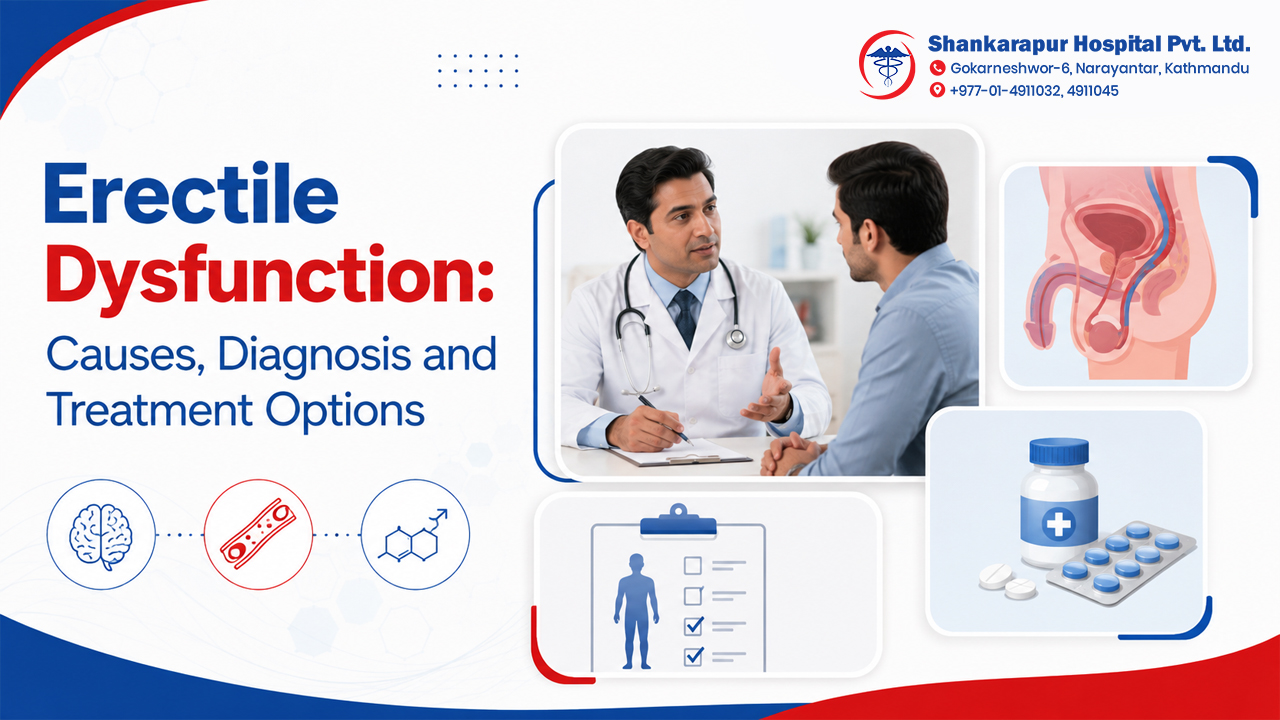
Erectile dysfunction (ED) means a persistent difficulty getting or keeping an erection firm enough for satisfactory sexual activity. An occasional problem can happen with tiredness, stress or alcohol and does not necessarily indicate a disorder. When the difficulty keeps returning, however, it deserves a proper assessment because blood-vessel disease, diabetes, medicines, hormones, nerve problems and psychological factors can all contribute often at the same time.
Treatment depends on the cause, general health, medicine safety and personal preferences. It may include improving underlying health risks, counselling, prescription tablets, a vacuum device, locally administered medicine or, for selected people, surgery. This guide explains the main causes, how clinicians investigate erection problems, the benefits and limits of available treatments, and when to seek urology care.
Medical note: This article provides general health education, not a diagnosis or personal treatment plan. Do not start, stop or combine medicines based on online information. A qualified clinician should assess recurring symptoms and medicine safety.
What is erectile dysfunction?
Erectile dysfunction is the persistent inability to attain or maintain an erection sufficient for satisfactory sexual performance. The word “persistent” matters. A temporary episode after a stressful day, poor sleep or heavier-than-usual alcohol intake is different from a pattern that happens repeatedly or causes ongoing concern.
An erection depends on coordinated signals between the brain, emotions, nerves, hormones, blood vessels and smooth muscle in the penis. Sexual stimulation normally triggers nerve signals that relax tissue and allow more blood to enter the penis. Veins then help retain that blood long enough to maintain firmness. A problem anywhere in this pathway can affect the erection.
ED is not a judgement about masculinity, attraction or the quality of a relationship. It is also not the same as low sexual desire, early ejaculation, delayed ejaculation or infertility, although these concerns may occur together. Age can increase the likelihood of health conditions that affect erections, but persistent erection difficulty should not simply be dismissed as an unavoidable part of ageing.
The European Association of Urology guideline notes that ED may be organic, psychogenic or mixed. In real life, mixed causes are common. For example, diabetes may reduce blood flow and nerve function, while worry after an unsuccessful sexual experience can add performance anxiety.
What are the signs of erectile dysfunction?
The main signs are difficulty getting an erection, difficulty keeping it long enough for sexual activity, or erections that are not consistently firm enough. The pattern can provide clues, but it cannot confirm the cause without a clinical assessment.
Possible patterns include:
-
An erection occurs sometimes but not when desired.
-
Firmness begins but reduces before or during sexual activity.
-
Erections are consistently less firm than before.
-
Morning or spontaneous erections have changed.
-
The problem occurs in every situation or only in a particular context.
-
Desire, ejaculation, orgasm, penile sensation or curvature has also changed.
A sudden change after a new medicine, illness, injury or operation is important to mention. So is a gradual change alongside increased thirst, frequent urination, reduced exercise tolerance, chest symptoms, weight change or low sexual desire. These details guide the assessment; they do not prove a specific diagnosis.
If the problem occurs only with a partner but not during sleep or masturbation, anxiety or relationship context may be relevant. That does not mean the symptom is “imaginary.” Psychological factors produce real physical effects and may coexist with vascular, hormonal or medication-related causes.
What causes erectile dysfunction?
Erectile dysfunction can result from conditions affecting blood flow, nerves, hormones, penile structure or emotional wellbeing. The U.S. National Institute of Diabetes and Digestive and Kidney Diseases also identifies medicines and lifestyle behaviours as possible contributors. Many people have more than one factor.
| Cause group | Examples | Why it may affect erections |
| Blood-vessel and metabolic | Diabetes, high blood pressure, high cholesterol, obesity, cardiovascular disease | May impair blood flow or damage the lining of blood vessels |
| Nerve-related | Stroke, spinal-cord injury, multiple sclerosis, diabetic neuropathy, pelvic nerve injury | May interrupt signals between the brain, spinal cord and penis |
| Hormonal | Testosterone deficiency, thyroid disorders and selected pituitary conditions | May affect desire, energy and the physiological erection pathway |
| Medicines and substances | Some antidepressants, blood-pressure medicines, sedatives, hormonal treatments, alcohol and recreational drugs | May alter desire, nerve signals, blood pressure or blood flow |
| Pelvic treatment or penile structure | Prostate or pelvic surgery, pelvic radiotherapy, trauma, Peyronie’s disease | May affect nerves, vessels or penile anatomy |
| Psychological and relationship | Performance anxiety, stress, depression, trauma, conflict or fear of failure | May disrupt arousal and reinforce a cycle of worry and erection loss |
| Lifestyle and general health | Smoking, low physical activity, poor sleep, heavy alcohol use | May worsen vascular, metabolic and emotional health |
The table is a starting framework, not a self-diagnosis tool. Similar symptoms can arise from different causes, and the most useful treatment depends on identifying the factors that are actually relevant to the individual.
Blood-vessel and metabolic causes
An erection requires sufficient arterial blood flow. Diabetes can affect both small blood vessels and nerves. High blood pressure, abnormal cholesterol, smoking and cardiovascular disease can also damage vascular health. Obesity and low physical activity may add metabolic and hormonal effects.
This is why an assessment may include blood pressure, blood glucose or HbA1c, and a lipid profile. These checks are not performed to assume that every person with ED has heart disease or diabetes. They help find treatable risks that might otherwise remain unnoticed.
Nerve, surgery and structural causes
Nerve signals may be affected by neurological disease, spinal injury, diabetes or operations in the pelvis. Prostate and other pelvic treatments can sometimes affect the nerves or blood vessels involved in erections. The timing of symptoms in relation to surgery, radiotherapy or injury is therefore important.
Pain, a new bend in the penis, a palpable plaque or shortening may point to Peyronie’s disease or another structural concern. These findings require examination rather than treatment with unverified products.
Hormonal causes
Low testosterone can contribute to reduced sexual desire and, in some people, erection problems. However, ED does not automatically mean testosterone is low, and one symptom alone is not enough to justify hormone treatment. Thyroid and other endocrine disorders may also be relevant in selected cases.
A clinician may request targeted hormone tests based on the history and examination. Testosterone treatment should be considered only when a deficiency is properly established and the potential benefits, fertility implications, contraindications and monitoring requirements have been discussed.
Medicines and substances
Some prescription and non-prescription medicines can affect sexual function, but the relationship is not always simple. The underlying condition being treated may contribute as well. Never stop a blood-pressure tablet, antidepressant or other necessary medicine on your own. A clinician can review the timing, consider alternatives where appropriate and protect the condition for which the medicine was prescribed.
Smoking, heavy alcohol use and recreational drugs may impair erections directly or worsen vascular, neurological and emotional health. Unregulated “male enhancement” products can also contain undeclared drug ingredients or interact with prescribed medicines.
Psychological and relationship factors
Stress, depression, anxiety, past sexual experiences and relationship strain can cause or worsen erection difficulty. A common pattern is a self-reinforcing loop: one unsuccessful experience creates worry; worry reduces arousal; the next erection becomes more difficult; and confidence falls further.
An open, confidential assessment can explore this without blame. If the patient wishes, a partner may be involved, but partner participation is not a requirement. Psychosexual counselling or psychological therapy can be used alone in selected cases or alongside medical treatment.
Can an enlarged prostate cause erection problems?
Urinary symptoms and erectile difficulties may occur in the same person, particularly with increasing age and shared health risks. Some treatments for prostate conditions can also affect sexual function. However, a weak urine stream or frequent urination does not prove that the prostate is causing ED.
If erection difficulty occurs with urinary urgency, night-time urination, hesitancy or incomplete emptying, read the hospital’s guide to enlarged prostate symptoms and treatment and arrange an assessment rather than assuming the two problems have one cause.
Why can ED be a wider health signal?
Persistent ED can be a marker of underlying cardiovascular or metabolic risk because the penile arteries and the coronary circulation share several risk factors. The American Urological Association guideline recommends counselling men that ED can signal cardiovascular disease or other conditions that may warrant evaluation.
This does not mean that a person with erection difficulty has heart disease. It means that recurring symptoms provide a useful opportunity to review blood pressure, glucose control, cholesterol, smoking, weight, activity and relevant family or personal history. This is especially important when the change is new or occurs alongside chest discomfort, unusual breathlessness or reduced exercise capacity.
The same principle applies to younger adults. Anxiety may be important, but age alone should not be used to rule out physical contributors. A clinician can assess both physical and psychological factors instead of forcing the symptom into one category.
If erection difficulty keeps returning, especially alongside diabetes, high blood pressure, urinary symptoms or a recent medicine change, consider a urology consultation through Shankarapur Hospital’s Urology Department. The purpose of the visit is to identify likely causes and discuss safe options—not to assume that every patient needs medicine.
How is erectile dysfunction diagnosed?
ED is usually diagnosed through a medical, sexual and mental-health history, a focused physical examination and selected tests. Not everyone needs extensive imaging. The clinician first looks for the symptom pattern, reversible factors, medicine risks and signs of wider health conditions.
1. A confidential history
Questions may cover:
-
When the difficulty began and whether the change was sudden or gradual
-
Whether an erection can be obtained, maintained and kept firm enough
-
Morning or spontaneous erections
-
Sexual desire, ejaculation, orgasm, penile pain, sensation or curvature
-
Whether the problem occurs in all situations or only some
-
Diabetes, blood pressure, cholesterol, heart disease, kidney disease or neurological illness
-
Pelvic surgery, radiotherapy, trauma or prostate treatment
-
Prescription medicines, non-prescription products, supplements, alcohol, tobacco and recreational drugs
-
Sleep, mood, stress, relationship context and performance anxiety
Validated questionnaires may help document severity and treatment response. A partner can contribute if the patient wants that involvement, but privacy and consent should guide the conversation.
2. Physical examination
The examination may include blood pressure, pulse and assessment of general vascular or hormonal signs. A focused genital examination can look for structural changes such as curvature or plaques. Neurological or prostate assessment may be considered when the history indicates it.
3. Targeted laboratory tests
Tests are selected rather than ordered as a universal package. Depending on the situation, they may include glucose or HbA1c, a lipid profile and total testosterone. Kidney, thyroid or other tests may be appropriate when symptoms or medical history suggest them. An abnormal result needs clinical interpretation; it should not be treated in isolation.
Shankarapur Hospital publicly lists laboratory support and ultrasound, CT, X-ray and colour Doppler within its diagnostic and imaging services. The treating clinician should determine which tests are relevant, and patients should confirm the availability of any specialised ED investigation before attending.
4. Specialised testing in selected cases
Penile Doppler ultrasound may be used to assess blood flow when the result would change management. Nocturnal erection testing, an office injection test or more specialised vascular, neurological or psychological assessment may be considered in complex cases. These are not routine requirements for everyone with ED.
The NIDDK diagnostic overview supports this stepwise approach: history and examination come first, followed by laboratory, imaging or other tests when indicated.
How is erectile dysfunction treated?
Treatment is personalised to the likely cause, severity, general health, safety, cost, access and patient preference. Clinicians may address risk factors and offer an erection-directed treatment at the same time. There is no single “best” option for every person, and needing a second approach does not mean treatment has failed.
| Treatment approach | May suit | Main advantage | Important limitation or risk |
| Health and risk-factor management | People with vascular, metabolic or lifestyle contributors | Supports erectile and general health | Improvement varies and may not be sufficient alone |
| Counselling or psychosexual therapy | Anxiety, stress, depression or relationship factors; often useful with mixed causes | Addresses the emotional and behavioural cycle | Requires engagement; physical contributors may still need treatment |
| Prescription PDE5 inhibitor | Many adults who can use it safely | Non-invasive and convenient | Dangerous with nitrates; interactions and side effects require review |
| Vacuum erection device | People wanting a drug-free, non-invasive option | Can work regardless of some systemic medicine issues | Practice is needed; bruising, numbness or an unnatural sensation may occur |
| Alprostadil injection or urethral treatment | When tablets are unsuitable or ineffective | Acts locally and can be effective | Training is essential; pain and prolonged erection are possible |
| Penile implant | Selected people with persistent ED after, or preference against, other options | Provides a dependable mechanical solution | Surgery is irreversible and carries infection and device risks |
The practical choice is based on more than effectiveness. A suitable plan also considers spontaneity, partner preferences, manual dexterity, medicine interactions, follow-up, reversibility and the person’s comfort with devices or procedures.
1. Treat contributing health conditions
Improving diabetes control, blood pressure, cholesterol and cardiovascular risk can support erectile health and reduce broader health risks. If a medicine may contribute, the prescribing clinician can decide whether an alternative is safe. Do not trade control of a serious condition for unmonitored sexual-health treatment.
Helpful lifestyle measures may include stopping smoking, becoming more physically active, working toward a healthy weight, moderating alcohol, avoiding recreational drugs, improving sleep and following an eating pattern that supports cardiovascular health. These measures may improve erectile function for some people, but they are not a guaranteed cure.
2. Counselling and communication
Psychological or psychosexual therapy can help with performance anxiety, depression, stress, sexual trauma or relationship tension. Treatment may focus on reducing pressure, improving communication, correcting misconceptions and rebuilding comfortable sexual contact. It can also help when a physical cause started the problem but worry now maintains it.
Involving a partner can be useful when the patient wants it. Confidential individual care remains appropriate when partner participation would feel unsafe, unwanted or unhelpful.
3. Oral PDE5 inhibitors
Medicines such as sildenafil and tadalafil belong to a group called phosphodiesterase type 5 (PDE5) inhibitors. They improve the natural blood-flow response to sexual stimulation; they do not automatically create desire or an erection without arousal.
The appropriate medicine depends on other conditions and medicines, desired timing, duration of effect, food interactions, side effects, cost and availability. A clinician should explain how the selected product is used. This article intentionally does not provide a dose or personalised schedule.
Common side effects can include headache, facial flushing, indigestion, nasal congestion and dizziness; some products have additional effects. Seek medical advice for serious or unexpected symptoms.
The nitrate safety rule
PDE5 inhibitors must not be combined with nitrate medicines or recreational nitrites such as “poppers.” The combination can cause a dangerous fall in blood pressure. Nitrates may be used for angina and can include glyceryl trinitrate and isosorbide preparations. Tell the prescriber about every medicine and substance used, even if it is taken only occasionally.
People with unstable chest symptoms, very low blood pressure or certain recent cardiovascular events may need cardiovascular assessment before ED treatment or sexual activity. If chest pain occurs after an ED tablet, seek emergency help, state which medicine was taken and when, and do not self-administer a nitrate unless emergency clinicians specifically direct it with full knowledge of the ED medicine.
Buy prescription treatment only through a regulated, legitimate source after professional assessment. Products advertised online as “herbal Viagra” or “natural male enhancement” may be ineffective, contaminated or secretly contain active medicines.
4. Vacuum erection device
A vacuum erection device uses a cylinder and pump to draw blood into the penis. A constriction ring then helps maintain the erection. It is a non-invasive, drug-free option and may be considered when tablets are unsuitable or when the patient prefers a device.
Correct sizing, instruction and timing matter. Possible drawbacks include bruising, a cold or numb sensation, discomfort, weakened ejaculation or dissatisfaction with spontaneity. A clinician should explain safe ring use, particularly for people with bleeding disorders or blood-thinning medicine.
5. Alprostadil and other locally administered treatment
Alprostadil may be delivered by injection into the penis or, in some settings, through the urethra. It can be considered when oral treatment is ineffective, contraindicated or not preferred. Injection treatment requires hands-on teaching, safe storage and a clear plan for what to do if an erection lasts too long.
Potential problems include pain, bleeding, scarring and priapism. Never use another person’s injection product, copy an online dose or combine erection treatments without explicit clinical guidance.
6. Testosterone treatment
Testosterone is not a routine erection booster. It may be considered when symptoms and properly interpreted tests confirm testosterone deficiency. Even then, the decision depends on the person’s health, fertility plans, potential contraindications and monitoring needs.
For someone with normal testosterone, hormone treatment is unlikely to address the actual cause and may create avoidable harm. Products sold as over-the-counter “testosterone boosters” do not substitute for diagnosis.
7. Penile implant and selected surgery
A penile prosthesis may be considered when less invasive options do not provide an acceptable result or when a well-informed patient prefers it. Inflatable and malleable devices create firmness mechanically. Satisfaction can be high in appropriately selected patients, but implantation is surgery and permanently changes erectile anatomy.
Risks include infection, mechanical failure, pain and the need for revision. The surgeon should explain device type, realistic feel, recovery, expected lifespan and what happens if the device is removed. Vascular reconstruction has a limited role and is generally reserved for carefully selected cases, such as some younger patients with a focal arterial injury.
What about shockwave therapy, PRP, stem cells and supplements?
Marketing often moves faster than evidence. Low-intensity shockwave therapy may produce a modest improvement in selected people with vasculogenic ED, but protocols vary and the European guideline gives only a weak recommendation for defined groups. It should not be advertised as a guaranteed cure.
The same guideline states that evidence is insufficient to recommend platelet-rich plasma (PRP) for routine clinical practice and advises its use only in a clinical-trial setting. Stem-cell approaches remain under investigation, with insufficient evidence for a clinical recommendation. Patients should ask whether a proposed treatment is guideline-supported, approved for that use, offered within a registered trial, and backed by transparent benefit and harm data.
Herbal products and supplements may interact with medicines, vary in quality and provide limited or uncertain benefit. “Natural” does not automatically mean safe. Discuss every supplement with the treating clinician or pharmacist.
When is urgent medical care needed?
Most erection difficulties can be assessed through a planned appointment. Certain situations require urgent or emergency care:
-
An erection lasting longer than four hours: This may be priapism and can permanently damage tissue if treatment is delayed.
-
Severe penile pain, a major injury, sudden swelling or deformity: Prompt examination is needed.
-
Chest pain, fainting, severe breathlessness or other emergency symptoms during sexual activity or after ED medicine: Call emergency services and tell the team which ED medicine was taken and when.
-
Sudden loss of vision or hearing after an ED medicine: Seek urgent medical care.
Do not wait for an online reply when an emergency warning sign is present. Shankarapur Hospital’s verified contact page lists its emergency phone as 01-4911032; use the nearest appropriate emergency service if reaching another facility would be faster or safer.
How should I prepare for an appointment about ED?
A short preparation list can make the consultation more useful and reduce the pressure of remembering sensitive details in the room.
Bring or note:
-
When the problem began and how often it happens.
-
Whether the issue is getting an erection, maintaining it, firmness, or all three.
-
Changes in morning erections, desire, ejaculation, orgasm, sensation, pain or curvature.
-
All prescription medicines, over-the-counter products, supplements and recreational substances.
-
Relevant conditions such as diabetes, high blood pressure, cholesterol problems, kidney disease, heart disease or neurological illness.
-
Previous pelvic surgery, radiotherapy, trauma or prostate treatment.
-
Recent blood-test results, if available.
-
The outcomes that matter to you, including spontaneity, fertility plans, privacy, cost or preference for a drug-free option.
Useful questions for the clinician include:
-
What causes are most likely in my situation?
-
Which health checks are appropriate, and which are unnecessary?
-
Could one of my current medicines contribute?
-
Is sexual activity safe with my cardiovascular health?
-
Which treatment options are compatible with my medicines?
-
What side effects or emergency signs should I know?
-
When should treatment be reviewed, and what is the next option if it does not help?
You may attend alone. Bring a partner only if you want their involvement. A respectful consultation should protect privacy and avoid blame.
Where can I seek help for erectile dysfunction in Kathmandu?
People with recurring erection problems can begin with a primary-care clinician or urologist. Shankarapur Hospital’s website lists specialist OPD consultations and identifies Dr. Wesh Ansari as a Urology & Kidney Transplant Surgeon. The hospital is located at Gokarneshor-06, Jorpati, Narayantaar, Kathmandu.
The public website confirms that the Urology Department covers male sexual health, but it does not list every ED test or treatment described in this article. Ask the hospital whether a particular investigation or therapy is available and appropriate. Patients can request a urology appointment online or use the hospital’s contact details for scheduling information.
Key takeaways
-
Recurring erection difficulty is a health symptom, not a personal failure.
-
Physical and psychological causes frequently overlap.
-
ED can provide a reason to check cardiovascular and metabolic health, but it does not prove that heart disease is present.
-
Treatment should match the cause, safety profile and patient preference.
-
PDE5 tablets must not be combined with nitrates.
-
An erection lasting longer than four hours requires emergency care.
If the problem keeps returning or is affecting wellbeing, a clinical assessment can replace uncertainty with a safer, evidence-based plan.
Request a urology appointment at Shankarapur Hospital, or contact the hospital to confirm consultation times and service availability.
Clinical disclaimer: This article is for general education and does not replace an individual medical assessment, diagnosis or treatment. Medicine suitability and sexual-activity safety depend on personal health and current medicines. Seek emergency care for the warning signs described above.
FAQs
The following FAQ module is intended to appear immediately after the article’s key takeaways and before the final disclaimer/author box in the CMS. Each answer is concise enough for readers and answer engines while retaining necessary safety context.
Is erectile dysfunction permanent?
Not necessarily. ED may improve when a contributing condition, medicine issue, lifestyle factor or psychological concern is addressed, and several treatments can improve erections even when the underlying cause cannot be fully reversed. The outlook depends on the cause, severity and general health. A clinician can identify realistic options rather than promising a permanent cure.
Is ED a normal part of ageing?
ED becomes more common with age, but persistent erection difficulty should not be dismissed as “normal ageing.” Age also increases the likelihood of diabetes, vascular disease, medicine use and other contributors that may be treatable. Assessment is particularly useful when the change is new, recurring or affecting wellbeing.
Can anxiety cause erection problems?
Yes. Performance anxiety, general stress, depression and relationship concerns can cause or worsen erection difficulty. Psychological and physical causes often overlap, so anxiety should not be assumed without assessment. Counselling, psychosexual therapy and appropriate medical treatment may be combined when both emotional and physical factors are present.
Can diabetes cause erectile dysfunction?
Yes. Diabetes can damage blood vessels and nerves involved in erections, especially when glucose levels have been high over time. It may also occur with high blood pressure, abnormal cholesterol or other vascular risks. Better diabetes and cardiovascular-risk management supports overall health, while an erection-directed treatment may still be appropriate after a medicine-safety review.
Does ED always mean testosterone is low?
No. Blood-flow problems, diabetes, nerve conditions, medicines, stress and many other factors are more relevant for many patients. Low testosterone is one possible contributor, particularly when sexual desire or other compatible symptoms have changed. Hormone treatment should follow a proper assessment and confirmed deficiency, not ED symptoms alone.
Are sildenafil and tadalafil safe for everyone?
No. PDE5 inhibitors are suitable for many adults but can interact with medicines and may be unsafe with certain health conditions. They must not be taken with nitrates or recreational nitrites because blood pressure can fall dangerously. A qualified prescriber should check cardiovascular symptoms, blood pressure and all medicines before recommending one.
Do ED tablets increase sexual desire?
No. PDE5 inhibitors support the blood-flow response to sexual stimulation; they are not aphrodisiacs and do not directly create sexual desire. When low libido is the main concern, a clinician may need to explore hormones, mood, relationship context, medicines or other causes instead of simply prescribing an erection medicine.
Can masturbation cause erectile dysfunction?
Masturbation itself is not recognised as a typical physical cause of ED. A person may nevertheless notice context-specific differences in arousal, anxiety, stimulation patterns or expectations. If erections are consistently possible alone but difficult with a partner—or the reverse—that pattern is useful information for a clinician or psychosexual therapist and should be discussed without shame.
Can exercise cure ED?
Exercise is not a guaranteed cure, but regular physical activity can improve vascular health, weight, blood pressure, glucose control and stress—all relevant to erectile function. People with concerning chest symptoms or major health conditions should ask a clinician what level of activity and sexual activity is safe before making substantial changes.
Which doctor should I see for erection problems?
A primary-care clinician can begin the assessment, review cardiovascular and metabolic risks, and refer when appropriate. A urologist is well placed to assess persistent ED, penile curvature, problems after pelvic treatment, or symptoms that have not responded to initial care. Endocrinology, cardiology or psychological support may be involved when the findings justify it.
Can erectile dysfunction affect fertility?
ED does not automatically mean sperm quality is reduced, but difficulty with penetrative intercourse or ejaculation can make conception harder. Some underlying conditions and hormone treatments may also affect fertility. Anyone planning a pregnancy should mention that goal before starting testosterone or other treatment so the care plan protects reproductive priorities.
When is ED an emergency?
An erection lasting more than four hours requires emergency care because prolonged pressure can damage penile tissue. Severe penile injury, sudden major swelling, chest pain, fainting, severe breathlessness, or sudden vision or hearing loss after ED medicine also needs urgent assessment. Tell emergency clinicians which erection medicine was taken and when.
Where can I get an ED consultation in Kathmandu?
Shankarapur Hospital’s Urology Department in Gokarneshor-06, Jorpati, Narayantaar, Kathmandu publicly includes male sexual health within its scope. Its site lists Dr. Wesh Ansari as a Urology & Kidney Transplant Surgeon. Use the verified appointment or contact page to confirm clinic times and whether any specific test or treatment is available.