If you recently underwent kidney stone surgery and your doctor told you that a DJ stent was inserted, you may wonder what it does, why you need it, and how long it should remain inside your body.
A DJ stent, also called a double-J stent or ureteral stent, is a thin, flexible tube placed between the kidney and bladder to help urine drain. It is commonly used in selected patients after kidney stone procedures, particularly when temporary swelling or blockage could interfere with urine flow.
While the stent is in place, you may experience frequent urination, mild burning, bladder discomfort, or small amounts of blood in your urine. These symptoms are relatively common. However, fever, chills, severe uncontrolled pain, heavy bleeding, or difficulty passing urine may indicate a complication that needs prompt medical attention.
Most DJ stents placed after kidney stone surgery are temporary and must be removed or exchanged according to the treating urologist's plan.
This guide explains the purpose of a DJ stent, expected symptoms, safe recovery practices, removal procedures, and warning signs that should never be ignored.
What Is a DJ Stent?
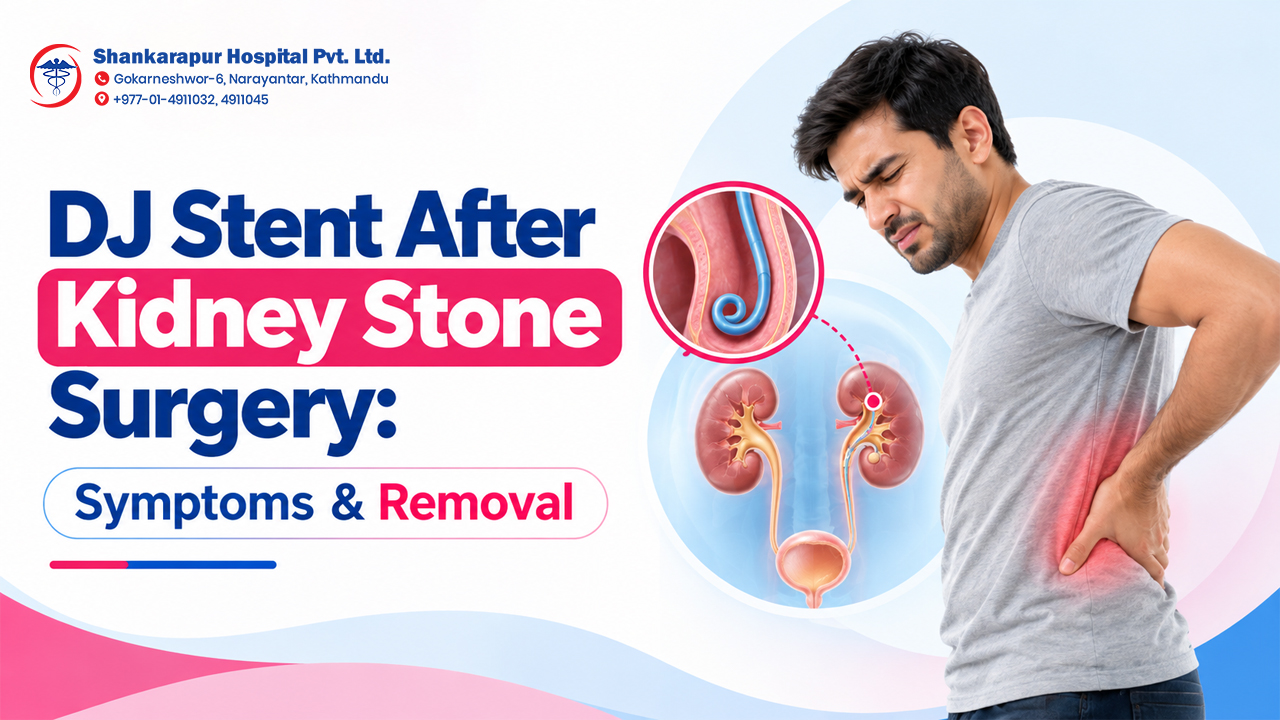
A DJ stent is a soft, hollow plastic tube placed inside the ureter, the narrow passage that carries urine from the kidney to the bladder.
Its name comes from its distinctive double-curved shape. One end curls inside the kidney while the other curls inside the bladder. These curls resemble the letter J and help hold the stent in position.
The tube creates a pathway that allows urine to drain from the kidney into the bladder, even when temporary swelling or a partial obstruction affects the ureter.
The Urology Care Foundation's explanation of ureteral stents describes how these tubes support urinary drainage after selected kidney stone procedures.
A DJ stent is not the same as a urinary catheter.
A urinary catheter usually drains urine from the bladder to an external collection bag. A DJ stent sits primarily inside the ureter and allows urine to follow its normal route into the bladder.
Most patients do not have an external urine collection bag because of a DJ stent alone.
Why Is a DJ Stent Inserted After Kidney Stone Surgery?
A surgeon may place a DJ stent to help urine drain while the urinary tract recovers from a procedure.
Kidney stones can obstruct the ureter, and procedures used to break or remove stones may temporarily irritate the ureteral lining.
If swelling develops, urine may not drain as easily.
A stent helps maintain drainage while healing takes place.
1. To prevent temporary urinary obstruction
After ureteroscopy or laser stone removal, the ureter may become swollen.
A DJ stent can help prevent temporary swelling from restricting the flow of urine from the kidney.
This may be particularly important when the procedure was difficult or the surgeon is concerned about postoperative obstruction.
2. To support healing after ureteroscopy
Ureteroscopy involves passing a small telescope through the urinary tract to locate and treat stones.
The procedure can sometimes cause temporary irritation or injury to the ureter.
A DJ stent may be used when the urologist believes additional drainage support is necessary during healing.
Shankarapur Hospital explains the procedure in its guide to laser surgery for kidney stones and postoperative recovery.
3. To reduce blockage from remaining stone fragments
After a stone is broken into smaller pieces, some fragments may remain and pass naturally through the urinary tract.
In selected cases, a stent helps maintain urinary drainage while these fragments pass.
A DJ stent does not directly dissolve kidney stones or guarantee that every fragment will pass.
4. To drain an obstructed kidney
A blocked kidney can become dangerous, particularly when an infection is present.
A ureteral stent may be inserted to bypass an obstructing stone and restore drainage.
When an infection is trapped behind a blockage, urgent drainage and appropriate medical treatment may be required before definitive stone removal.
The British Association of Urological Surgeons' kidney stone guidance explains the role of stenting in obstruction and infected stone disease.
5. To prepare for a later procedure
Sometimes a urologist cannot safely complete the planned stone treatment during the first procedure.
A temporary stent may help maintain drainage and allow the ureter to accommodate instruments used in a later procedure.
This does not necessarily indicate that the first procedure was unsuccessful. The decision depends on the patient's anatomy, stone characteristics, infection risk, and procedural findings.
Does everyone need a DJ stent after surgery?
No.
The European Association of Urology guidelines on urinary stones recommend against routine stent placement following uncomplicated ureteroscopy when a postoperative stent is not clinically necessary.
Stenting may still be appropriate when there is ureteral injury, swelling, bleeding, infection risk, residual fragments, or another concern.
Patients wanting to understand the different surgical approaches can read Shankarapur Hospital's comparison of RIRS, PCNL and ESWL for kidney stone treatment.
What Symptoms Are Normal After DJ Stent Placement?
It is common to experience urinary symptoms while a DJ stent is present.
The stent's lower end can irritate the bladder, and changes in pressure during urination may cause discomfort around the kidney.
The severity varies widely. Some patients experience little discomfort, while others notice symptoms that affect sleep, work, or daily activities.
Frequent urination
You may feel the need to urinate more often than usual, including during the night.
This happens partly because the end of the stent can irritate the bladder lining.
Sudden urinary urgency
Some people experience a sudden, strong urge to urinate even when the bladder is not very full.
The sensation can be uncomfortable, but it is a recognized stent-related symptom.
Burning during urination
Mild burning or stinging may occur because of irritation from the procedure or stent.
However, worsening burning accompanied by fever, chills, cloudy urine, or feeling generally unwell could indicate infection.
Blood in the urine
Small amounts of blood may make the urine appear light pink or slightly red.
This can become more noticeable after walking, lifting, or other physical activity.
Occasional light bleeding may occur while the stent remains in place, but heavy bleeding, substantial clots, or increasing bleeding requires prompt assessment.
Kidney or flank discomfort
Some patients feel aching or pressure in the side of the back, especially during or immediately after urination.
Bladder pressure can sometimes be transmitted toward the kidney through the stent.
Mild, intermittent discomfort may occur, but severe or persistent kidney pain should not be dismissed.
Lower abdominal or bladder pain
The lower curl of the DJ stent can cause a feeling of pressure, irritation, or mild cramping in the bladder area.
Symptoms may be more noticeable when the bladder fills or empties.
The NHS patient information on living with a ureteric stent describes these common urinary and pain-related symptoms.
DJ Stent Symptoms: Normal Discomfort vs Warning Signs
Not every symptom means the stent has moved or become infected.
The important questions are whether symptoms are mild or severe, whether they are getting worse, and whether there are signs of infection or reduced urinary drainage.
| Symptom | Possible significance | Recommended action |
|---|---|---|
| Mild burning without fever | Postoperative or stent irritation | Follow discharge advice; report persistent or worsening symptoms |
| Frequent urination or urgency | Common bladder irritation | Discuss if symptoms significantly affect daily life |
| Occasional light-pink urine | Possible irritation | Monitor and follow fluid/activity advice |
| Mild intermittent bladder or flank discomfort | Possible stent-related discomfort | Use prescribed symptom relief |
| Fever or shaking chills | Possible urinary infection | Seek urgent medical assessment |
| Severe or increasing flank pain | Possible obstruction, infection, or another complication | Seek urgent assessment |
| Heavy bleeding or significant blood clots | Possible bleeding complication | Seek urgent assessment |
| Inability to urinate | Possible urinary retention or obstruction | Seek emergency care |
| Severe illness, confusion, fainting, or collapse | Possible serious systemic complication | Seek immediate emergency care |
This table is general guidance, not a diagnostic tool. A person with one functioning kidney, impaired kidney function, pregnancy, or reduced immunity may need particularly prompt assessment.
When Should You Seek Medical Help With a DJ Stent?
Although DJ stents are widely used, complications are possible.
Infection, obstruction, displacement, and bleeding may require medical evaluation.
Fever or chills
A temperature of 38°C or higher, shaking chills, or a strong feeling of being unwell after stent placement needs urgent assessment.
Urinary infection can sometimes spread toward the kidney or bloodstream.
Do not assume fever is simply part of normal recovery.
Severe pain that does not improve
Mild discomfort is common, but intense kidney, back, or abdominal pain that remains severe despite the prescribed treatment is not something to tolerate at home.
A doctor may need to assess the stent's position, residual stone fragments, urine drainage, or infection.
Inability to pass urine
If you cannot urinate, especially when associated with increasing pain or abdominal swelling, seek emergency medical care.
Very low urine output can also be concerning in someone with kidney disease or a single functioning kidney.
Significant bleeding
A little blood can occur after a urinary procedure.
However, heavy bleeding, large clots, worsening red urine, or bleeding accompanied by dizziness or difficulty urinating warrants urgent medical attention.
Persistent vomiting or inability to drink
Vomiting may interfere with hydration and oral medicines.
If you cannot keep fluids down, particularly when accompanied by pain or fever, seek urgent assessment.
The Urology Care Foundation's patient information about ureteral stents and University Hospitals Plymouth's postoperative stent guidance identify these important warning signs.
For additional context, Shankarapur Hospital has an educational guide explaining urinary tract infection symptoms, diagnosis and treatment.
If symptoms suggest a serious infection, blocked urine flow, or uncontrolled pain, go to an emergency department rather than waiting for your scheduled removal appointment.
How Can You Reduce DJ Stent Discomfort?
Stent-related symptoms can be frustrating, but some practical steps may help.
Follow your treating urologist's discharge instructions because the safest advice depends on your procedure, kidney function, medicines, and other medical conditions.
Drink an appropriate amount of water
Adequate hydration can help prevent concentrated urine and may reduce irritation.
However, drinking excessive amounts of water does not guarantee that stent pain will disappear.
Some patients, particularly those with kidney failure, heart failure, or a prescribed fluid restriction, need individualized fluid advice.
Take only appropriate medicines
Your doctor may recommend or prescribe medicines to manage pain or urinary symptoms.
Depending on the patient, these may include suitable pain relievers, alpha-blockers, or medicines that reduce bladder spasms.
Do not start prescription medicines independently.
Anti-inflammatory medicines are not appropriate for everyone, especially people with certain kidney problems, gastrointestinal bleeding risks, pregnancy-related concerns, or medicines that increase bleeding risk.
The Cleveland Clinic's ureteral stent guidance discusses several approaches used for stent-related discomfort.
Adjust strenuous activity
Heavy lifting, running, and intense physical activity can sometimes increase discomfort or blood in the urine.
Gentle movement may be possible when permitted by the surgical team.
Return to work, exercise, and lifting according to your specific discharge instructions.
Pay attention to changing symptoms
Record when pain occurs, whether urine becomes increasingly bloody, and whether fever or new symptoms develop.
If discomfort becomes difficult to manage, contact the treating team. Significant stent symptoms may warrant medication adjustment or reassessment.
Do not remove a DJ stent yourself merely because it feels uncomfortable.
How Long Does a DJ Stent Stay After Kidney Stone Surgery?
Many temporary DJ stents used after kidney stone procedures remain in place for several days to a few weeks. However, there is no universal removal date.
The duration depends on why the stent was inserted, whether the procedure was complicated, whether infection is present, and whether additional treatment is planned.
Some short-term postoperative pathways remove stents within approximately 3–14 days. Other patients may need a longer period or a planned exchange.
The NHS guidance on managing a stent after ureteroscopy describes a short-term pathway and emphasizes that the treating team must provide the actual removal date.
The most important instruction is to follow your own written removal or exchange plan, rather than relying on another patient's schedule or a general online estimate.
Questions to confirm before leaving the hospital
Make sure you understand:
-
Why was the DJ stent inserted?
-
On what date was it placed?
-
When is removal or exchange planned?
-
Will removal involve a visible string or cystoscopy?
-
Which symptoms require urgent medical attention?
-
Whom should you contact if the appointment is missed or symptoms change?
If you have already passed the planned removal date, contact your urology team promptly to arrange review. Do not assume the stent can safely remain indefinitely because symptoms are mild.
How Is a DJ Stent Removed?
DJ stent removal is usually a relatively short procedure, although the method depends on the type of stent and the patient's condition.
Removal using an attached string
Some temporary stents have a thin string extending through the urethra.
The healthcare team may remove the stent by gently pulling the string at the planned time.
In selected circumstances, a urologist may explicitly instruct a patient to remove a string-attached stent at home.
Do not pull, cut, or remove the string yourself unless the treating clinician has specifically instructed you to do so and explained the procedure.
If the string accidentally moves or the stent comes out, contact your urology team for advice.
Removal using flexible cystoscopy
When the stent does not have an accessible removal string, the urologist may use a cystoscope.
A cystoscope is a thin instrument with a camera that passes through the urethra into the bladder.
The clinician identifies the lower end of the stent, grasps it with a small instrument, and removes it.
Local anaesthetic gel is commonly used. Most uncomplicated removals can be performed without major surgery, although individual circumstances differ.
Is DJ stent removal painful?
Discomfort varies from person to person.
Some patients feel brief pressure or a pulling sensation during removal. Others experience more noticeable pain or cramping.
Mild bladder or kidney discomfort can also occur afterward.
The Cleveland Clinic's explanation of ureteral stent removal describes the procedure and possible short-term discomfort.
If you are anxious about removal, discuss pain-control options and the planned method with your treating urologist.
What Happens After DJ Stent Removal?
Most patients can return to their usual routine after an uncomplicated removal, subject to the original surgery and their doctor's advice.
For a short period after removal, you may experience:
-
Mild burning during urination
-
Temporary urinary frequency
-
Light-pink urine
-
Mild bladder cramps
-
Brief flank discomfort
These symptoms often settle within 24–48 hours, but recovery varies.
The Urology Care Foundation's information about symptoms after stent removal explains that temporary cramps or urinary urgency can occur after the procedure.
When should you call your doctor after removal?
Contact the treating team if discomfort is worsening, persistent, or unusual.
Seek urgent medical attention if you develop fever, chills, severe pain, inability to urinate, heavy bleeding, or persistent vomiting.
Removing the stent does not automatically confirm that every kidney stone fragment has cleared. Follow-up may still be necessary.
What Happens if a DJ Stent Is Left Inside Too Long?
A temporary stent requires a clear removal or exchange plan.
Leaving it longer than intended can increase the risk of complications, including mineral buildup on the stent, infection, blockage, migration, or difficulty during removal.
Stent encrustation
Minerals in urine can accumulate on the stent's surface, forming a hard coating.
This is called encrustation.
The risk becomes more important when a stent remains in place for an extended period, especially in someone prone to stone formation.
Severe encrustation can make removal more complicated and may require additional procedures.
Infection
Bacteria can colonize urinary devices, and some patients may develop urinary tract infections.
Fever, chills, increasing pain, and other infection symptoms should be assessed promptly.
Blockage or migration
A stent can sometimes become blocked or move out of its intended position.
Symptoms may include new pain, urinary leakage, reduced urine flow, or a change in the usual symptom pattern.
The NHS patient guidance on ureteric stent complications describes encrustation, displacement, and infection-related concerns.
If you are unsure whether a previous stent was removed, contact the treating hospital. The clinical team can review records and arrange appropriate imaging when necessary.
Can You Work, Exercise, Travel or Have Sex With a DJ Stent?
Many patients can continue some normal activities with a DJ stent.
However, the right level of activity depends on the original procedure, ongoing symptoms, and the surgeon's restrictions.
Returning to work
Office-based work may be possible relatively soon after an uncomplicated procedure.
Jobs involving heavy lifting or prolonged physical effort may require a longer recovery or temporary modifications.
Exercise
Walking and gentle movement may be suitable once permitted by the surgical team.
Strenuous activity can increase flank discomfort or visible blood in the urine in some patients.
Travel
Travel may be possible, but consider the planned removal date, access to medical care, and the possibility of unexpected symptoms.
Avoid travel arrangements that make you miss the scheduled stent removal or exchange.
Sexual activity
A stent without an external string may not prevent sexual activity, although discomfort can occur.
A visible removal string can be displaced by pulling or friction. Ask your urologist about restrictions if a string is present.
Do not treat generalized activity advice as permission to disregard your individual postoperative instructions.
Follow-up After Kidney Stone Surgery: Why It Still Matters
The DJ stent is only one part of recovery.
A urologist may also need to assess whether the stone was fully removed, whether urine drains normally, and whether the patient remains at risk of further stones.
Follow-up may involve a clinical examination, urine tests, blood tests, or imaging, depending on the clinical situation.
Preventing future kidney stones
Stone removal does not always correct the underlying reasons stones developed.
Preventive care may include:
-
Reviewing stone composition if analysis is available
-
Discussing appropriate daily fluid intake
-
Assessing dietary sodium and other nutritional factors
-
Reviewing recurrent infections
-
Investigating metabolic causes in selected patients
-
Considering longer-term prevention medicines where indicated
The National Institute of Diabetes and Digestive and Kidney Diseases' kidney stone treatment information describes stone analysis and follow-up testing as part of management.
Shankarapur Hospital also explains why kidney stones can return after surgery and how recurrence risk is assessed.
Where Can You Seek DJ Stent and Urology Care in Kathmandu?
Patients who have undergone kidney stone surgery need reliable follow-up, particularly if a DJ stent remains in place.
When selecting a kidney hospital or urology hospital in Nepal, consider access to a qualified urologist, appropriate imaging and laboratory services, emergency assessment, and a clear postoperative follow-up pathway.
These services are relevant because stent symptoms can sometimes resemble urinary infection or continued stone-related problems.
Urology services at Shankarapur Hospital
Shankarapur Hospital is a multispecialty hospital located in Gokarneshor-06, Jorpati, Narayantaar, Kathmandu, Nepal.
Its Urology Department lists treatment for kidney stones, including ureteroscopy, RIRS and PCNL.
Patients can also explore its guide to kidney stone surgery and treatment options in Nepal.
The hospital publishes information about diagnostic and imaging support, inpatient care, and emergency and critical care services.
For a routine review, use the Shankarapur Hospital appointment page.
For specific questions about follow-up or service availability, contact Shankarapur Hospital.
Hospital contact: 01-4911032
If your DJ stent was inserted at another hospital, contact the original surgical team first when possible, as they know the reason for insertion and your intended removal schedule.
If you have severe symptoms, seek the nearest appropriate emergency care instead of waiting for an outpatient appointment.
Frequently Asked Questions About DJ Stents
Can a DJ stent move from its original position?
Yes, although it is designed to remain in place. A stent may occasionally migrate or become dislodged. New urinary leakage, unusual pain, or a visible change in an external string should be discussed with the urology team.
Does a DJ stent mean my kidney stone has been completely removed?
Not necessarily. Some stents are inserted after stone removal, while others are used before definitive treatment or when residual fragments remain. Ask your surgeon about the stone-clearance results and follow-up plan.
Can a DJ stent be permanent?
Most DJ stents inserted for kidney stone surgery are temporary. Certain long-term urinary conditions may require continued stenting with scheduled replacement. Do not assume a stent is permanent unless the urologist has explained a long-term management plan.
Can I take antibiotics to prevent problems with my stent?
Do not take antibiotics on your own. Antibiotics may be prescribed for a confirmed or suspected infection or in selected procedural situations, but routine self-medication is inappropriate. Fever or other infection symptoms require professional assessment.
Is it safe to fly with a DJ stent?
Flying may be possible when you are medically stable and your surgical team has cleared you. Confirm that travel will not interfere with your removal date or follow-up and that you can access medical care if complications occur.
What if I have forgotten my DJ stent removal date?
Contact your treating hospital or urologist promptly. Ask them to confirm the insertion date, intended duration, and removal or exchange plan. Do not wait for symptoms to develop before arranging follow-up.
Conclusion: DJ Stent Care Is an Important Part of Kidney Stone Recovery
A DJ stent can help maintain urine drainage after selected kidney stone procedures and reduce the risk of obstruction during healing.
Temporary urinary frequency, mild bladder discomfort, burning, and light bleeding can occur while the stent remains in place. However, fever, chills, severe uncontrolled pain, heavy bleeding, or difficulty passing urine requires urgent medical attention.
The most important recovery steps are to follow your discharge instructions, manage discomfort appropriately, and attend the scheduled stent removal or exchange.
If you need specialist advice following kidney stone treatment in Kathmandu, you can request a urology consultation at Shankarapur Hospital to discuss suitable follow-up care.
Remember: A DJ stent is generally temporary. Never miss the planned removal or exchange without contacting your urology team.